Observe before you mix
A leaf study begins with looking, not filling paper with colour. Place one clean leaf beside the Watercolour Leaf Study page and notice its centre vein, widest point, tip, and the way one side differs from the other. A light pencil map gives your brush a useful boundary, but it should not become a dark outline. Keep a scrap nearby for testing a colour puddle before it reaches the page.
Build colour in transparent layers
Mix more water than pigment for the first wash and leave a narrow highlight beside the centre vein. Let the surface become matte before adding the second layer; a wet page makes shadows bloom farther than planned. Place the darker mix along a lower edge or fold, then soften one end with a clean, damp brush. This gives the leaf a change of value without covering the paper’s light.
- Use the larger brush for the body and the smaller brush for veins.
- Blot excess water on the towel before a fine line.
- Write an observation beside the painting while the leaf is still in view.
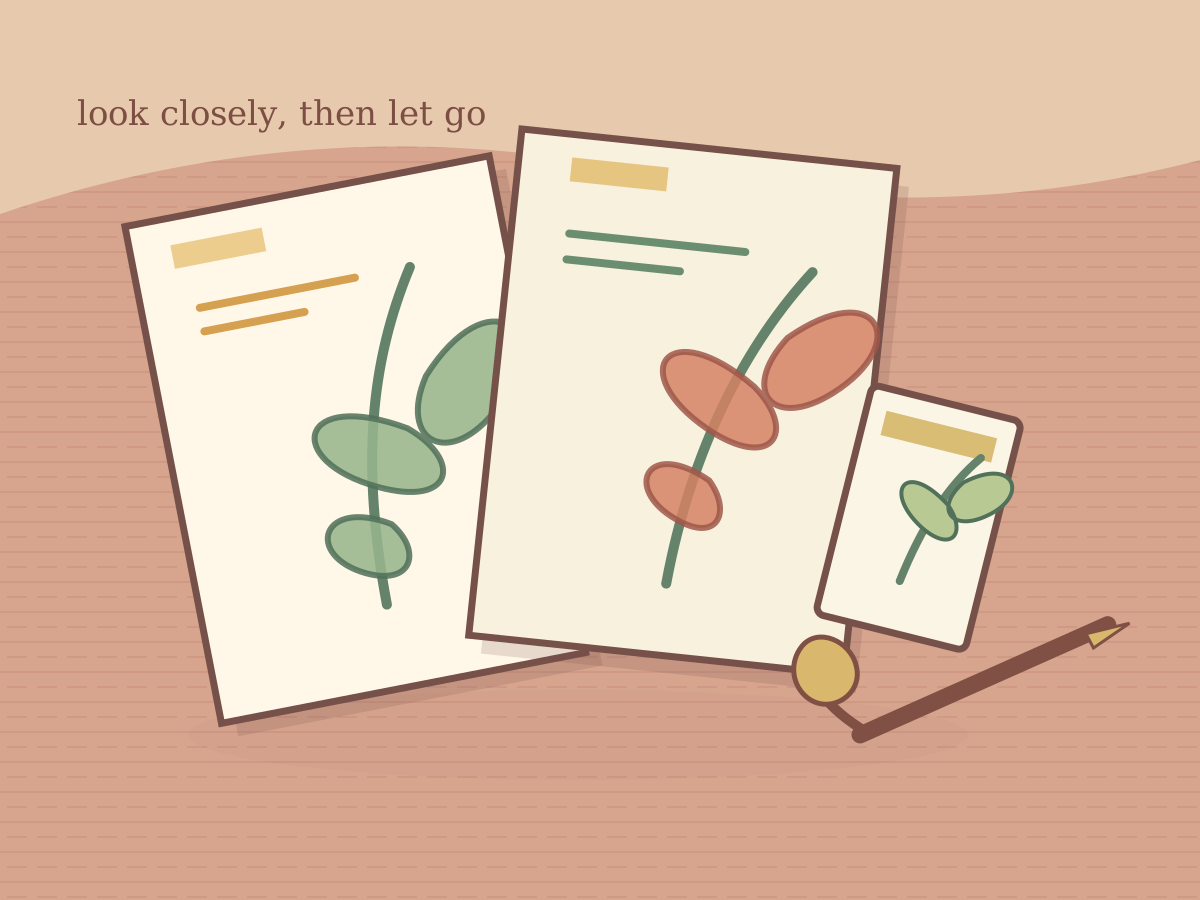
Make the third page a record rather than another attempt at perfection: a small swatch, loose silhouette, date, and one sentence about the edge or colour. Comparing the three pages shows where your eye became more specific. Keep them together in a sketchbook or use one as a quiet note card once the paint is completely dry.
If the first wash dries patchy, keep the variation and use it as information about how much water your brush held. The point of the study is a clearer observation, not a perfectly flat green.